December 29, 2025
A piano is more than an instrument. It is a central part of a home, a tool for learning, and for many musicians it is an essential partner in creativity. Keeping it in excellent condition helps preserve both its sound quality and its lifespan. If you have never scheduled a piano tuning service before, or if it has been a while since your last appointment, you may be unsure what the process involves. Understanding what to expect can help you feel more prepared while also giving you confidence that your piano is receiving the care it needs. A well-maintained instrument is more consistent in tone, more enjoyable to play, and better equipped to withstand the daily impacts of humidity and temperature changes. With the right technician, you can expect the appointment to be thorough, informative, and supportive of your long-term musical goals.
Initial Evaluation and Preparation
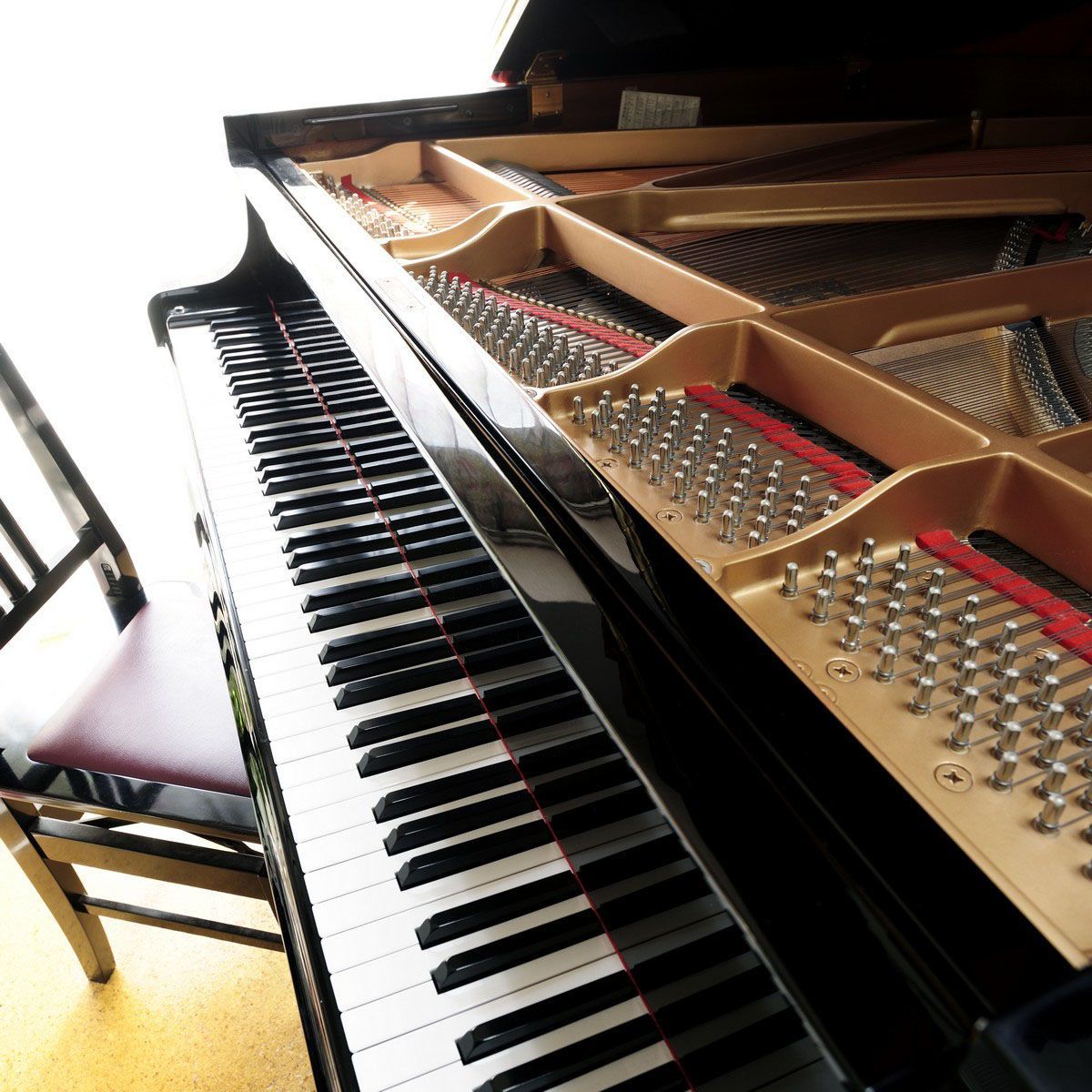
When your technician arrives, they will begin with an initial evaluation of your piano. This is one of the most important steps in a piano tuning service because it helps the technician understand how long the appointment may take and whether your piano needs adjustments beyond standard tuning. The evaluation begins with a visual inspection of the interior components. The technician may remove the fallboard and front panel to check strings, hammers, pins, bridges, and the soundboard. Even small issues like minor hammer wear or uneven action can affect tuning stability, so identifying them early allows the technician to choose the right tuning approach.
Once the technician has assessed the condition of the piano, they will determine whether it is ready for tuning or whether it requires preliminary adjustments. This may include stabilizing loose tuning pins, repositioning hammers, or confirming that the action responds properly. Some pianos that have not been serviced in a long time may need a pitch correction, which temporarily pulls the instrument closer to standard pitch before fine tuning can begin. All of this preparation is centered on providing the best tuning outcome. During this stage, you can expect your technician to explain what they are finding and to answer any questions you have. Clear communication is a hallmark of a reputable provider offering a professional piano tuning service.
The Tuning Process and How It Works
After the evaluation, the technician will begin tuning the piano. This part of the appointment involves fine adjustments to each string to bring the piano into proper pitch. A typical piano has more than two hundred strings, so tuning requires patience, accuracy, and a trained ear. Many technicians use a combination of electronic tuning tools and aural skills. The electronic device helps establish reference pitches, while listening carefully to the interaction of overtones allows the technician to produce a warm, balanced sound.
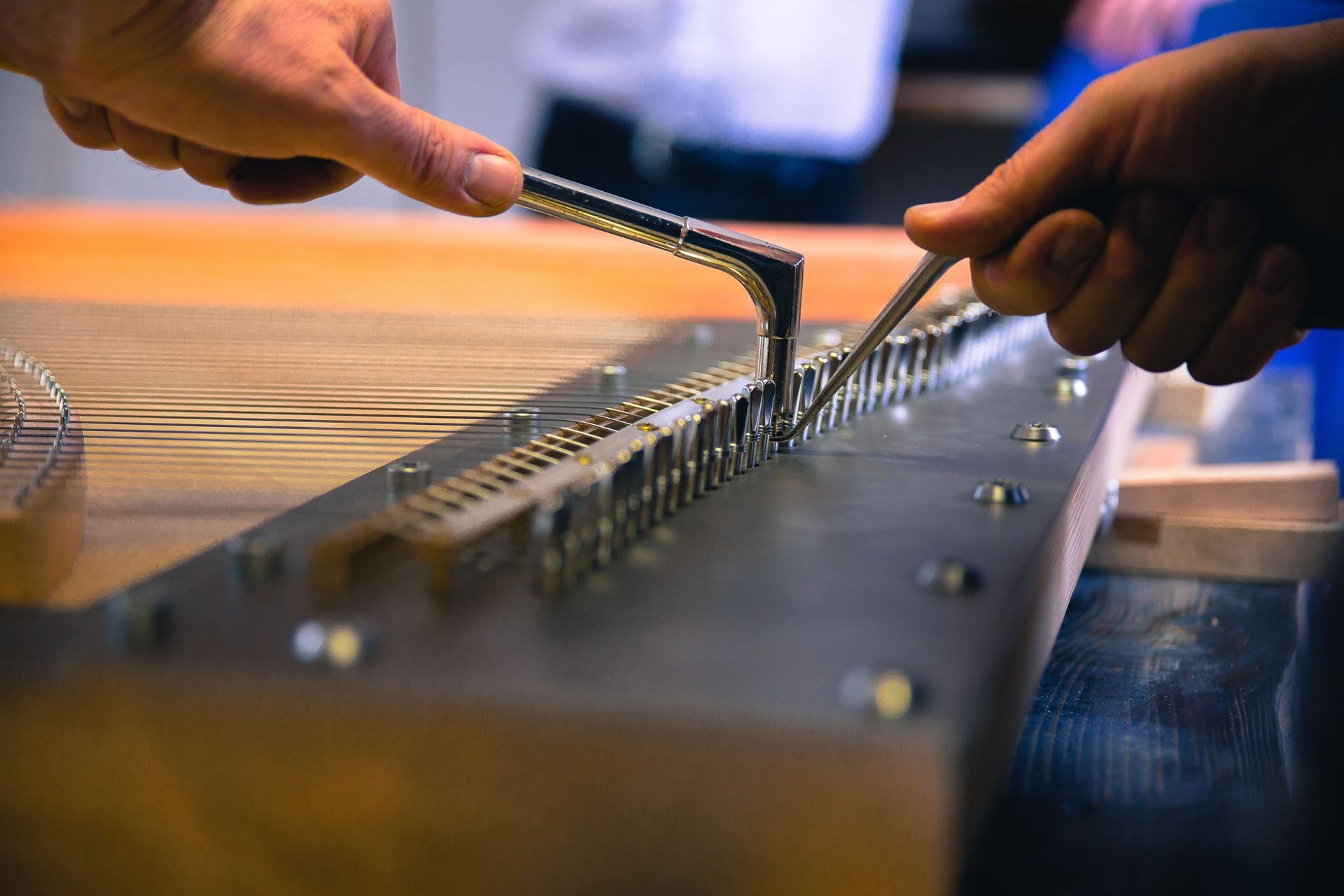
The technician starts by tuning the middle register. This section sets the foundation for the rest of the instrument, and from there, they adjust the upper and lower registers. Each string is brought into alignment by manipulating the tuning pins with a tuning lever. Because each note in a piano often has two or three strings, the technician will make sure those unison strings match each other exactly. Small shifts in tension make a big difference in sound, which is why tuning should always be handled by someone with formal training and field experience.
During this stage, you may hear the same notes played repeatedly. That repetition is normal and is part of producing stable tuning. A skilled technician will also test intervals and chords to confirm that the piano has the cohesive, rich sound it should. This careful, methodical work is what shapes the final tone and ensures the tuning lasts as long as possible. For most pianos, this process is routine. However, if your piano has gone a long time without a piano tuning service, additional adjustments may be needed to achieve full accuracy.
Time Expectations and Influencing Factors
One of the most common questions people have is how long tuning will take. The answer depends on the condition of the piano, but a standard tuning session usually lasts about an hour. The time can increase when the piano requires extra work or when its internal components introduce complications. According to the Berklee College of Music, a standard piano tuning takes around an hour, but complications with factors like pedals, pins, and hammers can make the process longer. This fact highlights why each instrument is unique and why no two tuning appointments are exactly the same.
Environmental conditions also play a role in how long the tuning may take. Humidity fluctuations cause wood components to expand and contract, which affects tuning stability. If a piano is kept in a room that experiences large temperature swings, its pitch may drift more dramatically, requiring more extensive correction. Pianos that have not been tuned regularly may also be significantly off pitch, which means the technician may need to perform a pitch raise before fine-tuning can begin. This additional step takes extra time and increases the precision required during the appointment.
What Happens After the Tuning Is Complete
Once the tuning itself is finished, the technician will test the piano thoroughly to make sure the sound is consistent across the entire keyboard. This final test often involves playing scales, chords, arpeggios, and sections from common repertoire. The technician listens for tonal inconsistencies or any lingering tuning issues. If they hear something that needs correcting, they will make final adjustments. This post-tuning confirmation step ensures the piano sounds balanced from the lowest bass notes to the highest treble tones.
At this point, the technician may offer recommendations for ongoing care. Because tuning stability is directly affected by the environment, they may suggest using a humidifier or dehumidifier in the room where the piano is kept. They may also talk with you about an ideal tuning schedule. Most pianos benefit from tuning at least once or twice a year, although new pianos or pianos in unstable environments may need more frequent attention. High-level players may also prefer more frequent tuning because they notice small changes in pitch more easily.
Continuing Care and How to Maintain Your Piano
After the appointment, your piano will sound clearer, more stable, and more expressive. To maintain this condition, it is important to understand how ongoing care affects tuning longevity. Keeping your piano in a consistent environment is one of the most effective steps you can take. Frequent fluctuations in humidity weaken tuning stability. Placing the piano away from windows, heating vents, fireplaces, and exterior doors can help maintain a steady internal environment.
Regular use of the piano can also support better tuning stability. When a piano is played often, its internal components flex and settle more predictably. However, even pianos that are rarely played still require tuning. A piano is a tension-based instrument, and instability in its strings develops regardless of playtime. Maintaining a tuning schedule helps protect the structural integrity of the instrument while also keeping it sounding its best.
Knowing what to expect from a piano tuning appointment can help you feel comfortable and confident throughout the process. From the initial evaluation to the careful adjustments during tuning and the final quality checks, every step is designed to bring out the best in your instrument. Tuning is a delicate skill that relies on experience, precision, and patience. By choosing a reputable piano tuning service and following a consistent maintenance schedule, you protect the sound, responsiveness, and longevity of your piano. With proper care, your piano remains a dependable and inspiring part of your home for years to come.
If you're ready to give your piano the expert care it deserves, schedule a visit with Bruce Ryndfleisz Piano Service Inc today. Our team is here to help your instrument sound its best with reliable, professional tuning you can trust.